Increasing golf swing speed leads to better distance and stronger ball flight, which are both really important for lowering scores and making the game more enjoyable. My experience has shown that even modest increases in swing speed can help players reach shorter approach shots and different pin placements. So, I’m going to break down some of the best ways to boost swing speed, covering both technical and training aspects, to help you see real improvements in your game.

Why Does Golf Swing Speed Matter?
Swing speed in golf measures how fast the clubhead moves at the point of impact with the ball. The higher the speed, the farther the ball is likely to travel, so long as the shot is well-struck. Amateur players often undervalue swing speed and may focus more on accuracy. While accuracy is important, building more speed gives me greater flexibility with club choices and opens up more scoring opportunities. According to data from multiple club manufacturers and shot-tracking platforms, adding just 5 mph to swing speed can mean 10–15 yards of extra distance with the driver.
Golf used to be a game dominated by finesse and accuracy. As technology and training evolved, modern players can now combine accuracy with higher speeds to maximize their performance. This popular shift has made it worthwhile for both casual and serious golfers to work on their swing speed with practical, safe routines. You’ll see the benefits in both distance and confidence, especially as even a single shot that gets you closer to the green can shave strokes off your score.
Basic Concepts to Understand About Swing Speed
Building swing speed comes down to a few essential ideas. You don’t have to be a professional athlete, but knowing the basics helps you make the most of your training time and energy.
- Clubhead Lag: This refers to the angle between your lead arm and the club shaft during the downswing. A higher lag angle allows for a “whip” effect, which increases speed as the club moves through impact.
- Ground Force: Speed goes up when you effectively push off the ground with your legs and transfer energy through your core and into your arms.
- Sequencing: The order in which you move your hips, torso, arms, and hands matters. Proper sequencing helps produce more speed without making swings feel forced.
- Flexibility and Mobility: With good range of motion in your shoulders, hips, and spine, you can build a longer backswing, which often leads to greater speed.
It helps to check out videos from golf teachers online to watch these elements in action and recognize where your own swing may be leaving potential speed untapped. If you feel sore or stiff after practice, make sure flexibility and warm-up are part of your routine.
Simple Steps to Start Increasing Golf Swing Speed
Getting faster doesn’t have to be overwhelming. Here’s what I focus on when helping golfers see progress:
- Warm Up Correctly: A full warm-up gets your muscles and joints ready to move fast. I use dynamic stretches for my hips, back, and shoulders to reduce injury risk and help my body swing freely.
- Use a Speed Radar or Launch Monitor: Tracking numbers keeps me honest and helps me target real improvements instead of guessing. Launch monitors and swing radars are more affordable now and super helpful for feedback.
- Work on Timing and Rhythm: Rushing the backswing can leak speed. A smooth tempo with an explosive downswing finishes with more clubhead speed.
- Build Lag: Practice drills that let you hold the angle between your arms and club longer in the downswing and then release it just before impact for more speed.
- Include Swing Speed Drills Weekly: Working out with a Golf Swing Training Aid that weighs more than a regular golf club will help Increase Swing Speed and Power, Quickly and Easily!
Let me Introduce you to the Speed Iron – Weighted Golf Swing Training Aid! The Speed Iron will help you build golf swing speed easily without any other contraptions, straps or to have to use. It also works Great for Increasing Lag and improving timing and rhythm.
Build Power in Your Golf Swing
Increasing speed means building power, not just swinging harder. You can get there with a mix of smart swing changes and athletic training.
- Engage Your Lower Body: Power starts from the ground up. I push off my back foot and clear my hips early so that the energy flows smoothly through my body. Watching videos of professional golfers like Rory McIlroy or Justin Thomas really shows how much they use their legs and hips for speed and control.
- Train Your Core: Strong core muscles protect your spine and help whip the club through impact. Exercises such as medicine ball rotational throws or planks with hip rotations help you get stronger in the right places.
- Improve Flexibility: Better range of motion leads to bigger shoulder and hip turns, which equals more speed. I stretch my shoulders, hamstrings, and hip flexors a few times a week for lasting results and always add some static stretching after practice.
Working out with the Speed Iron will build Swing Speed and Power even without much other training or exercises. Just swing the Speed Iron continuously around 8 – 12 reps per set for 6 to 8 sets for a Total of 80 – 120 Swings per workout. At the end of the workout, I stop in between each swing to do a normal swing, not continuous swings.
Increase Lag for Maximum Speed
Lag is vital if you want to get the whip effect in your swing. This releases the club at just the right point for maximum speed at impact. I’ll share a couple of cues and drills that made a big difference for me:
- Focus on Wrist Angles: Keep the back of your lead wrist flat and the club shaft trailing during the downswing, which helps those angles stay loaded up for a more powerful release.
- Pump Drill: Take your club to the top, then pump it halfway down while maintaining the lag angle. Repeat, and then swing through to a full finish, feeling that stored energy release at the ball.
It might feel strange at first but after a few practice sessions, the movement feels far more natural and gets results you can see on the course. The easiest way to build lag in your swing is using the Speed Iron! The clubhead of the Speed Irons weigh at 2 times that of a regular golf club. With this extra weight it is impossible to cast your club or clubhead. Working out with the Speed Irons build lag without having to use anything else or any exercises.
Workout with a Weighted Swing Speed Training Aid
Training aids can help you speed things up. Weighted clubs and training sticks are practical tools used by many professional golfers. Here’s why I always keep one in my practice bag:
- Increases Strength and Speed: Swinging a heavier club helps build strength and speed for your normal swings. Once I switch back to my regular club, it feels lighter and faster. Working out with a heavier swing training aid also builds hand strength and grip! It also builds strength and Power in your forearms, especially the under forearm.
- Improves Coordination: As you get used to the added weight, your swing becomes smoother and easier to coordinate at higher speeds. This builds muscle memory to swing the golf club through the same swing plane repeatedly without having to have any other swing thoughts in your head before you swing.
I use the Speed Irons 2 – 3 times a week, switching it up with my standard club to balance speed and accuracy. Progress is usually clear within a week.
Recommended Speed Training Routine with the Speed Iron
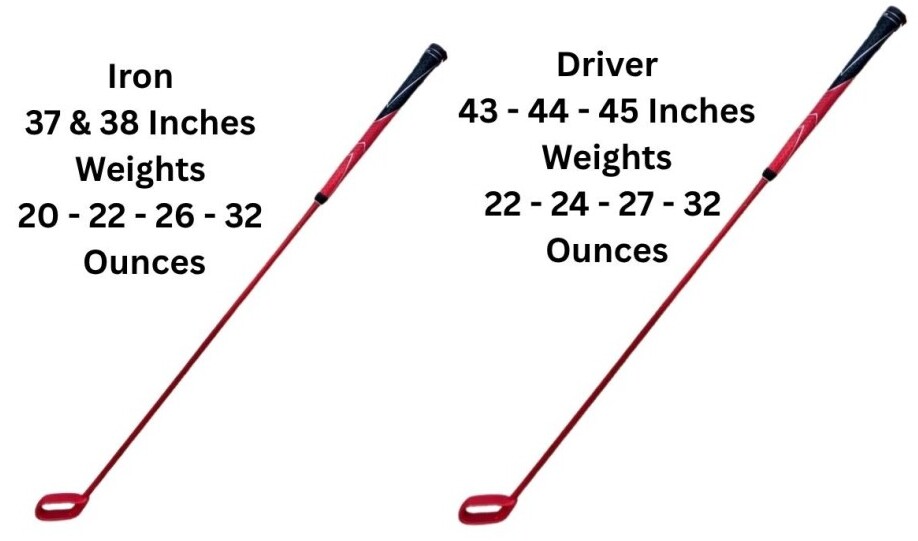
Workout Monday – Wednesday – Friday or every other day. You need to rest or not workout with the Speed Irons for at least 24 hours before playing golf or doing another workout to let your muscles recover. The Speed Irons come in 2 Basic Lengths, Driver and Iron. Iron Length Speed Iron – The Speed irons come in 2 lengths. Driver – 45, 44 and 43 inches. Iron comes in 37 and 38 inch lengths. Driver – 45, 44 and 43 inches. Iron – 37 and 38 inch lengths.
- Dynamic stretching and warm-up (5–10 minutes) with a lighter Speed Iron that weighs around 20 or 21 ounces.
- 3 or 4 sets with the Iron length Speed Iron, with the last set or 2, I swing one swing at a time, not continuous swings. This helps make sure you get your timing and rhythm back for a good swing.
- 4 – 6 sets with the Driver length Speed Iron, also doing single swings the last few sets.
You can hit balls after working out with the Speed Irons if you like to help correct your swing or you can just workout and then play later. You can increase yardage and accuracy easily with the Speed Irons! By tracking clubhead speed through the entire session, I can clearly spot steady progress and keep myself motivated to push for new personal bests.
Practical Gear and Tools for Speed Training
The right equipment makes practice easier and more effective. Here is what I recommend and use personally:
- Radar or Launch Monitor: Tools such as the Swing Speed Radar or value-friendly launch monitors display swing speed after each hit, offering instant and clear feedback.
- Weighted Clubs: The Speed Irons are the Best golf swing speed training aids around! That’s all you need.
Extra tip: Try videoing your swings during drills. It’s a simple, helpful way to spot improvements and spot areas that need work.
Increasing golf swing speed comes down to mixing better technique, strength, flexibility, and specific drills. Regular work with the right tools will move the needle, not just on your scorecard but in the satisfaction, you get from the game. Remember, golf is supposed to be fun, and chasing higher speeds can add more excitement and a fresh challenge to every round. If you would like to gain 20 Yards plus and improve your scores, check out the Speed Irons here.